Fatemeh is a business strategy and M&A professional, with +5 years of international experience in heavy industry, and the financial & consulting industries- Her educational background is in Industrial Engineering & International Commerce
We all know the first minute of any business interaction is make-or-break. Having effective communication soft skills helps you to set the tone, deliver clarity, and captivate your audience. Whether you’re drafting an email, running a meeting, or informally presenting your ideas, mastering clear and effective communication soft skills can skyrocket your reputation and personal brand.
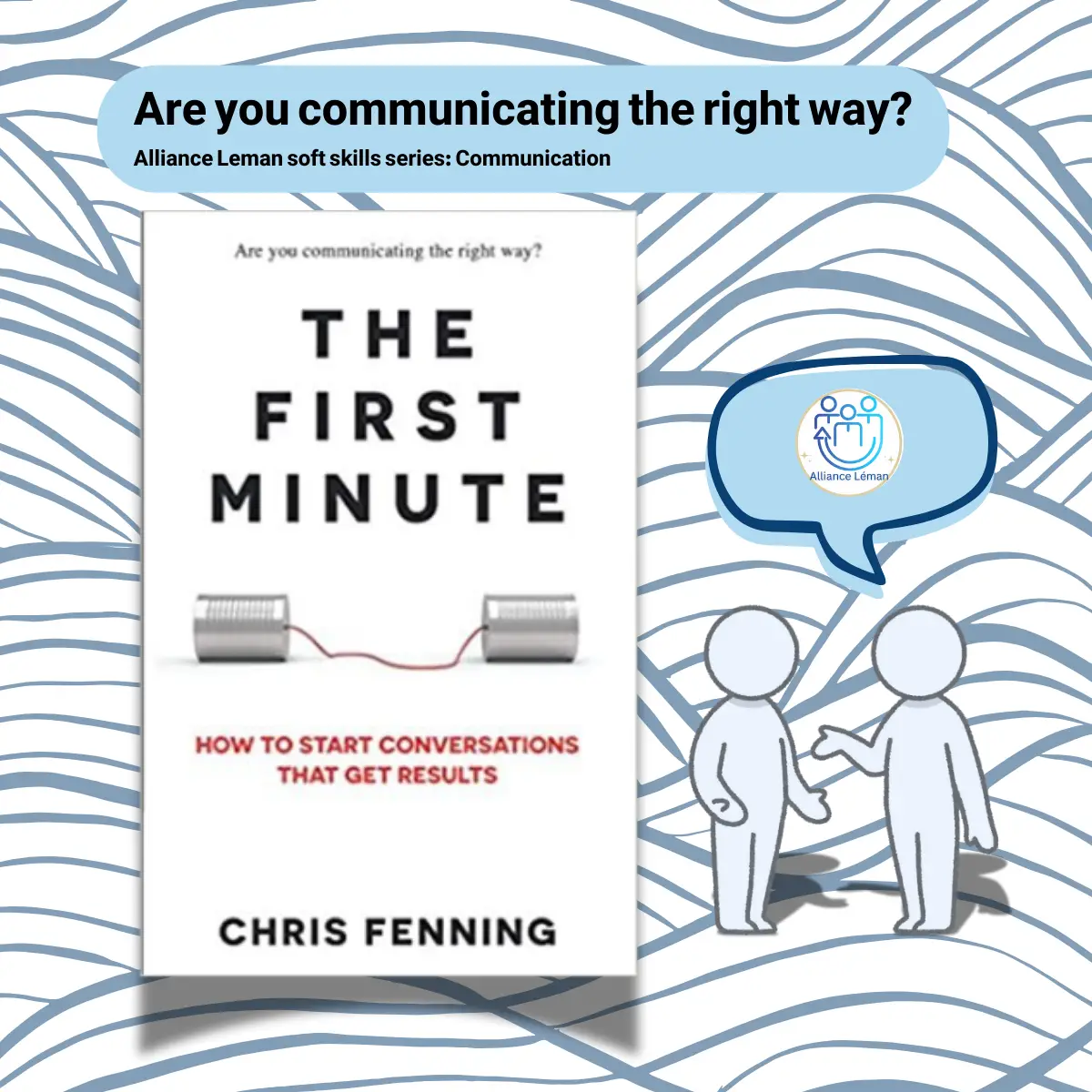
Hello everyone, and welcome to another book recommendation on soft skills! Today, we’re diving into the book: The First Minute: How to Start Conversations That Get Results by Chris Fenning.
Let’s explore some of the key techniques it shares to improve your effective communication skills!
Source: The first minute by Chris Fenning
Effective communication technique 1: Framing
Let’s start with framing, an incredibly effective tool to steer your communication. It’s vital for almost any conversation, from casual chats to formal presentations. Framing has three key parts:
First, Context—kick things off by setting the stage and aligning your audience’s focus with yours.
Next, Intent—be clear about your objective. Are you looking for input, a decision, or simply sharing information? Defining your intent ensures your audience responds the right way.
Finally, state your core message early and concisely. This grabs attention right away and keeps your conversation on track.
Effective communication technique 2: Structured Summaries
Let’s dive into structured summaries. When tackling complex topics, it’s easy to overwhelm your audience with too much detail. To avoid this, try the GPS Method:
G is for Goal—start by clearly defining your objective.
P is for Problem—identify the issue that needs addressing.
S is for Solution—propose a solution to move the conversation forward.
By framing your message this way, you shift from overwhelming details to a clear, solution-focused discussion that’s easy for your audience to follow.
Here is another interesting summary of the book by Toby Sinclair
Read here about what everybody is saying, another book recommendation from our soft skills series
Read here about adaptability and how to cultivate it
Effective communication technique 3: Timely and Effective Conversations
Next, let’s discuss the importance of timing in communication. It’s not just about what you say, but when you say it. Here’s how to manage that:
Time Check: Start by setting expectations about how long the conversation will take. Instead of asking, “Do you have a minute?”, say something like, “I need about 10 minutes of your time.” This makes it clear and respectful.
Validation Checkpoint: After framing your discussion and providing a summary, it’s important to confirm if the person is available to engage. A simple “Do you have time for this now?” ensures that both parties are aligned.
Applying these techniques soft skills
Finally, let’s talk about applying these techniques in different contexts:
Emails: Choose a subject line that conveys context, then open with your purpose. Format the body in bullet points with the goal, problem, and solution.
Meeting Invitations: Start with the purpose of the meeting and what is expected from each individual.
Presentations: Open with a high-level summary that includes the context, purpose, and problem to set parameters for a targeted conversation.
If you liked these techniques, then go read the book. And please like this video, share it with your friends, and subscribe to our channel!